
Italian restaurant near Exmouth Market, Clerkenwell
Exmouth Market is one of Clerkenwell's best-loved streets, lined with cafes, restaurants and independent shops. It also has a surprising Italian connection. ...
Read the story
Our wine list is mostly Italian, but a few bottles from elsewhere earn their place, especially when there's seafood on the table. One of them comes from the rainy, green north-west corner of Spain. Albariño is on the white list at Fiena, our family-run Italian cafe, bar and restaurant at 4 Medway Court, Judd Street, London WC1H 9QX, a few minutes' walk from King's Cross St Pancras. Here's where it comes from, and what to eat with a glass.
Albariño is a white grape grown in Galicia, in north-west Spain, and just across the border in north-west Portugal, where it's called Alvarinho. Both names come from the Latin albus, meaning "white". For a long time the story was that monks brought the grape to the area in the 12th century, but more recent studies suggest it's native to Galicia and northern Portugal.
In Portugal, Alvarinho is found in the Vinho Verde region, though it's only authorised in Monção and Melgaço. In Spain, its great home is Rías Baixas.
Rías Baixas is a Spanish Denominación de Origen, or DO, covering the province of Pontevedra and the south of A Coruña. It became an official DO in 1988, replacing an earlier status, granted in 1980, that was simply called "Denominación Específica Albariño". Albariño makes up over 90% of the vines planted there, and over 90% of the wine is white.
Before the mid-1980s, Albariño was mostly blended with other local grapes. Once the region was established, it emerged as a wine in its own right, made for drinkers who wanted clean flavours and ripe fruit.
Albariño has a distinctive aroma with a citrus undertone, often compared to apricot and peach. The wine is usually light and high in acidity, with alcohol of around 11.5 to 12.5%. One curious footnote: in 2008 a visiting French expert raised doubts about Australian "Albariño", and DNA tests showed almost all of it was actually a different grape, Savagnin. Background from Wikipedia's Albariño page and its Rías Baixas page.
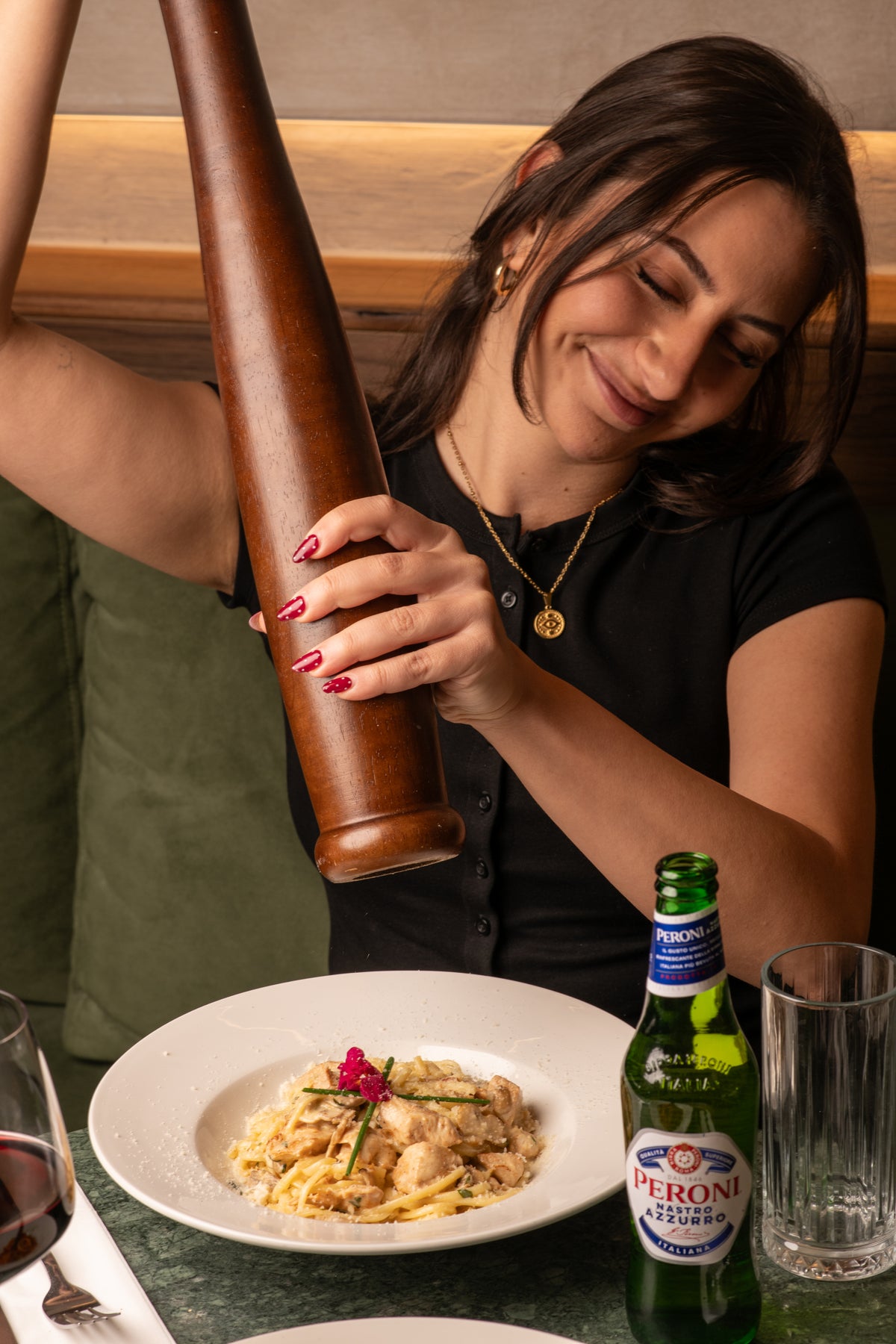
On our drinks menu, the Albarino is from Galicia, Spain, with bright lime and green apple aromas and floral notes. It sits on the white list alongside the Gavi di Gavi, the Vitis Nostra Grillo from Italy and the Sancerre from the Loire. See our guide to our wine list and our post on Sancerre, and ask our team about bottles when you order.
A light, fresh white with good acidity is a natural partner for seafood. From our main menu:
See our posts on mussels, linguine alle vongole, scallops and mixed fried seafood.
Guests often mention the drinks as well as the food. Normof, who came for pizza, added: Wine was good, too.
(Normof, Google review) Kiley suggested sitting outside and enjoying a cocktail here.
(Kiley, Google review) And Fanghan found that The pasta and pizza were both delicious, and the portions were quite generous.
(Fanghan, Google review)
“A genuinely authentic Italian restaurant.”
Christine, Google review, 2026
A glass from Spain's Atlantic coast and a plate of seafood, a few minutes from King's Cross. Book a table or just walk in. Please drink responsibly.
Exmouth Market is one of Clerkenwell's best-loved streets, lined with cafes, restaurants and independent shops. It also has a surprising Italian connection. ...
Read the storyFew drinks are as tied up with London's history as gin. It was blamed for a public health crisis in the 18th century, gave its name to a whole style of spiri...
Read the storyAsk for an Italian white and most people think of Pinot Grigio. But Italy has hundreds of local grapes, and some of the most interesting come from Sicily. On...
Read the story
