
Italian restaurant near Exmouth Market, Clerkenwell
Exmouth Market is one of Clerkenwell's best-loved streets, lined with cafes, restaurants and independent shops. It also has a surprising Italian connection. ...
Read the story
Most of the wine list at an Italian restaurant is, naturally, Italian. But a few bottles from our neighbours earn their place, and one of the best-known white wines in the world is among them. Sancerre is on the white list at Fiena, our family-run Italian cafe, bar and restaurant at 4 Medway Court, Judd Street, London WC1H 9QX, a few minutes' walk from King's Cross St Pancras. Here's where it comes from, and what to eat with a glass.
Sancerre is a French appellation, an Appellation d'origine contrôlée or AOC, named after the hilltop town of Sancerre in the eastern Loire Valley, south-east of Orléans. It's best known for white wine made from Sauvignon Blanc. There is red and rosé Sancerre too, made from Pinot Noir, but red is only about a fifth of the output and rosé less than one per cent. White Sancerre was one of the original AOCs, awarded in 1936.
The area is part of the Loire's "central vineyards", so called because they're close to the centre of France. Sancerre sits on the west bank of the Loire, almost facing its neighbour Pouilly-Fumé across the river, another famous Sauvignon Blanc. It's more than 480 kilometres from the Atlantic, so its climate is continental, with short, hot summers and long, cold winters.
The town stands on an outcrop of the same chalk that runs from the White Cliffs of Dover down through Champagne and Chablis. Small valleys cut through it, each with its own soil, and growers roughly divide them into three:
Most white Sancerre is unoaked, which lets that minerality show.
Vines were probably first planted here by the Romans, perhaps in the 1st century AD; the foundations of two Roman bridges can still be seen across the Loire at St-Satur, Sancerre's river port. For centuries the area mostly grew Pinot Noir and Gamay for red wine. Then, in the late 19th century, the phylloxera epidemic wiped out most of the vines, and growers replanted with Sauvignon Blanc, partly because it grafted better onto American rootstocks. After the Second World War, Sancerre became a favourite easy-drinking white in Paris bistros, and in the late 1970s and 1980s a push for quality turned it into the elegant, food-friendly wine you now find on restaurant lists around the world. Background from Wikipedia's Sancerre wine page.

On our drinks menu, the Sancerre is from the Loire, France, and described as medium-bodied, full and balanced, with lychee and honey nuances and a fresh mineral finish. If you like Sauvignon Blanc, it's worth comparing with our bright, crisp Sauvignon Blanc from Chile: same grape, a very different place. Other whites on the list include the Gavi di Gavi, the Albarino from Galicia and the Pouilly Fuisse Albert Bichot. See our guide to our wine list, and ask our team about bottles when you order.
Sauvignon Blanc is famously good with fish, seafood and soft cheeses, especially goat's cheese, according to Wikipedia's Sauvignon Blanc page. From our main menu:
See our posts on salads and light lunches, scallops, sea bass with capers and risotto and seafood.
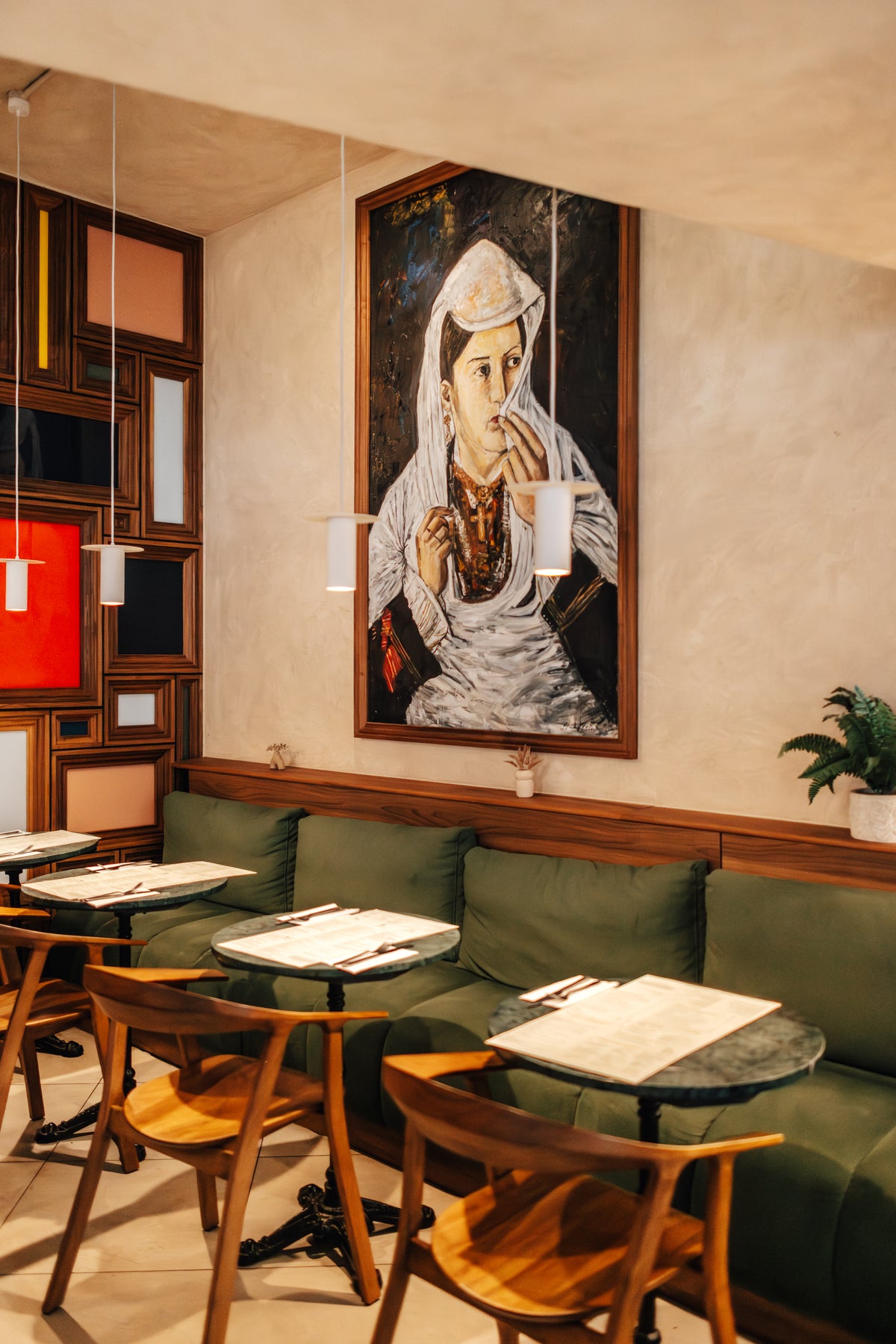
Guests often mention the drinks as well as the food. One guest who had pasta and risotto wrote that The drinks were also really good.
(Google review) Yasmeen found that the cocktails were delicious
(Yasmeen, Google review), and Anastasia, who came straight from King's Cross on a December evening, ordered the salmon: So delicious and comforting
(Anastasia, Google review).
“It is worth every pound I spent.”
David, Google review, 2026
A glass from a chalk hill on the Loire, a few minutes from King's Cross. Book a table or just walk in. Please drink responsibly.
Exmouth Market is one of Clerkenwell's best-loved streets, lined with cafes, restaurants and independent shops. It also has a surprising Italian connection. ...
Read the storyFew drinks are as tied up with London's history as gin. It was blamed for a public health crisis in the 18th century, gave its name to a whole style of spiri...
Read the storyAsk for an Italian white and most people think of Pinot Grigio. But Italy has hundreds of local grapes, and some of the most interesting come from Sicily. On...
Read the story
