
Italian restaurant near Exmouth Market, Clerkenwell
Exmouth Market is one of Clerkenwell's best-loved streets, lined with cafes, restaurants and independent shops. It also has a surprising Italian connection. ...
Read the story
If there's one Italian white almost everyone has ordered at some point, it's Pinot Grigio. It's on the white list at Fiena, our family-run Italian cafe, bar and restaurant at 4 Medway Court, Judd Street, London WC1H 9QX, a few minutes' walk from King's Cross St Pancras. But where does it come from, why is it called "grey", and what should you eat with it? Here's a short guide.
Pinot Grigio and Pinot Gris are the same grape. Grigio is Italian and gris is French, and both mean grey. In Germany it's called Grauburgunder. The name comes from the colour of the grapes: the skins usually have a pinkish-grey hue, though they can range from blue-grey to pinkish-brown. The "Pinot" part may come from the way the grapes grow, in small clusters shaped like pine cones.
It's thought to be a natural mutation of Pinot Noir. Researchers at the University of California, Davis found the two have a remarkably similar DNA profile, and the vines and leaves are so alike that colour is the only real difference. Read more in our post on Pinot Nero, Italy's name for Pinot Noir.
The grape has been known since the Middle Ages in Burgundy, where it was probably called Fromenteau. It had reached Switzerland by 1300. Emperor Charles IV was reportedly a fan and had cuttings sent to Hungary, where Cistercian monks planted them by Lake Balaton in 1375; there it became known as Szürkebarát, the "grey monk". In 1711 a German merchant, Johann Seger Ruland, found a grape growing wild in the Palatinate and made a wine that became known as Ruländer. It later turned out to be the same grape.
In Italy, it's grown in Lombardy around Oltrepò Pavese, in South Tyrol, Italy's northernmost wine region, and it's prominent in Friuli-Venezia Giulia. In 1961 the Santa Margherita wine group, in the north of Italy, became the first company in the world to make the pink-skinned Pinot Grigio grapes into a white wine. Around 2005, Pinot Grigio really took off, and today the grape covers about 115,000 hectares worldwide.
There are two well-known styles. In Alsace, Pinot Gris tends to be full-bodied and "spicy", with lower acidity and an almost oily texture. In Italy, the grapes are often picked early to keep their refreshing acidity and tone down the fruitiness, which gives a lighter, crisper and more neutral wine. That's why Italian Pinot Grigio is such an easy match for food. Background from Wikipedia's Pinot gris page.
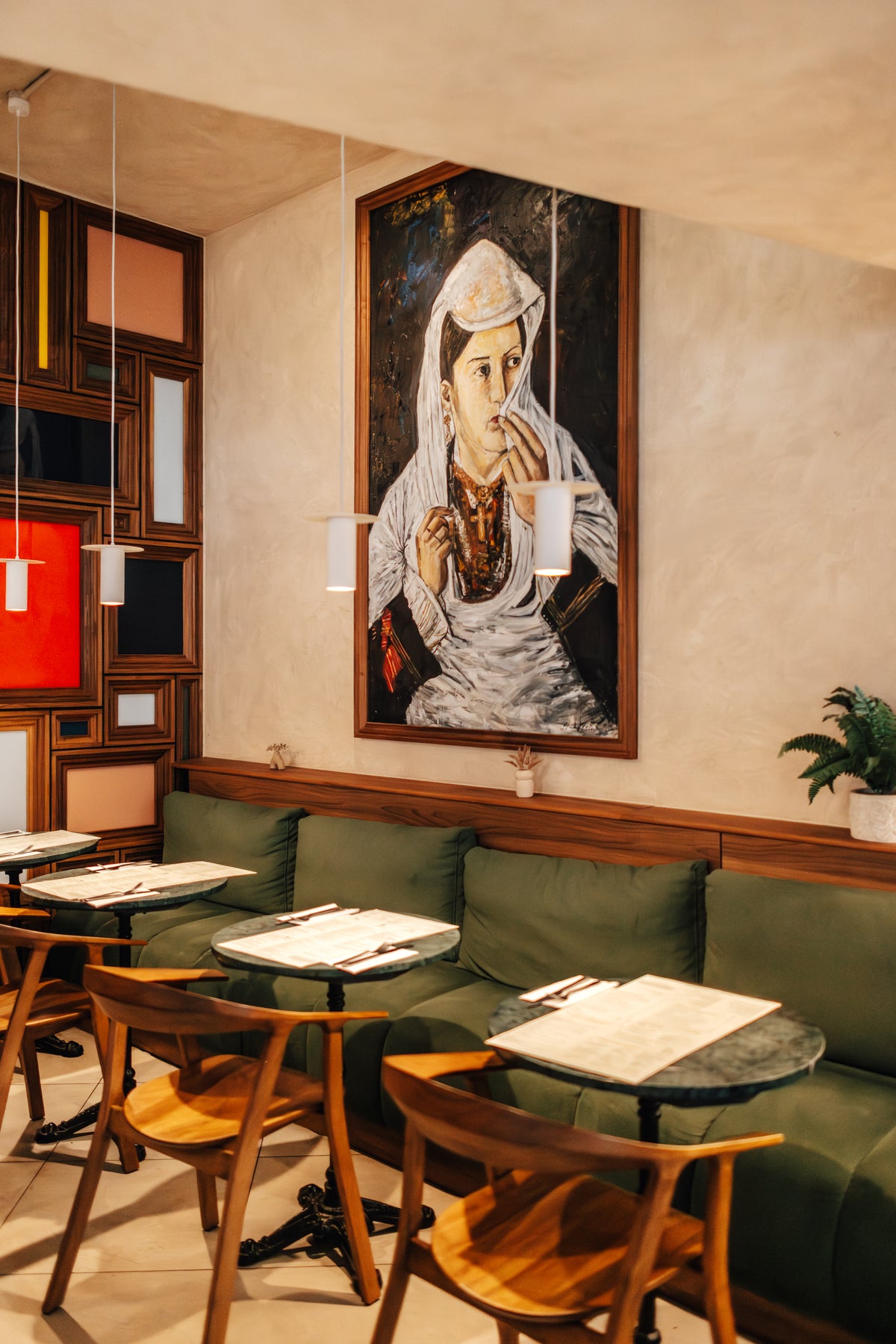
On our drinks menu, the Pinot Grigio from Italy is described simply as crisp, with citrus fruit. If you like it, try the other Italian whites on the list: the Sicilian Vitis Nostra Grillo, a dry white with crisp citrus and green apple, the Ca Del Lago Inzolia, pale golden and bright, and the bone-dry Gavi di Gavi. Prefer pink? The Chemin de Provence rosé is pale and delicate. See our guide to our wine list and our post on Grillo. Ask our team about glasses and bottles when you order.
A light, crisp white works with a lot of the menu, especially seafood, cream and lemon. From our main menu, which starts at midday:
See our posts on carbonara, linguine alle vongole, tiger prawns and insalata Caprese.

Guests often mention the wine alongside the food. Normof wrote: Wine was good, too.
(Normof, Google review) And Neil, who popped in at lunchtime: Food was great, arrived quick, service was lovely.
(Neil, Google review)
A glass of Italy's favourite crisp white, a plate of pasta, and a few minutes' walk from King's Cross. Book a table or just walk in. Please drink responsibly.
Exmouth Market is one of Clerkenwell's best-loved streets, lined with cafes, restaurants and independent shops. It also has a surprising Italian connection. ...
Read the storyFew drinks are as tied up with London's history as gin. It was blamed for a public health crisis in the 18th century, gave its name to a whole style of spiri...
Read the storyAsk for an Italian white and most people think of Pinot Grigio. But Italy has hundreds of local grapes, and some of the most interesting come from Sicily. On...
Read the story
