
Italian restaurant near Exmouth Market, Clerkenwell
Exmouth Market is one of Clerkenwell's best-loved streets, lined with cafes, restaurants and independent shops. It also has a surprising Italian connection. ...
Read the story
It's in our spritzes, it tops up our French 47, and it's what most people reach for when there's something to celebrate. There are two proseccos on the drinks list at Fiena, our family-run Italian cafe, bar and restaurant at 4 Medway Court, Judd Street, London WC1H 9QX, a few minutes' walk from King's Cross St Pancras. Here's what prosecco actually is, what the letters DOC and DOCG on the label mean, and how our two compare.
Prosecco is an Italian white wine from a large area covering nine provinces in two north-eastern regions, the Veneto and Friuli-Venezia Giulia. It takes its name from the village of Prosecco, near Trieste. The first known written mention of the name comes from an Englishman, Fynes Moryson, who travelled through northern Italy in 1593 and listed "Prosecho" among the most famous wines of Italy. The spelling "prosecco" first appears in print in 1754.
The main grape used to be called prosecco too, but in 2009 Italy renamed it Glera, so that "Prosecco" became purely a protected place name, a geographical indication, rather than the name of a grape. The rules allow up to 15% of other permitted grapes in the blend. Most prosecco is sparkling (spumante) or lightly sparkling (frizzante), and a still version exists but is rarely exported. Background from Wikipedia's prosecco page.
Champagne gets its sparkle from a second fermentation inside each bottle. Most prosecco is made with the tank method, also called the Charmat–Martinotti method, where the second fermentation happens in large stainless-steel tanks. It keeps the wine fresh and fruity and is one reason prosecco costs less than Champagne. Prosecco is usually best drunk young, and its flavour is often described as crisp, with notes of apple, pear and white peach. On the label, "Brut" is the driest of the common styles, then "Extra Dry", then "Dry", which, confusingly, is the sweetest of the three.
On our drinks menu, under prosecco and sparkling, you'll find:
Prosecco also goes into four of our cocktails: the Aperol spritz, Campari spritz and Limoncello spritz (each with soda water) and the Hugo spritz with elderflower syrup and fresh mint, plus the French 47, with gin, lemon juice and simple syrup. See our posts on aperitivo hour on Judd Street, the Campari spritz and the French 47.
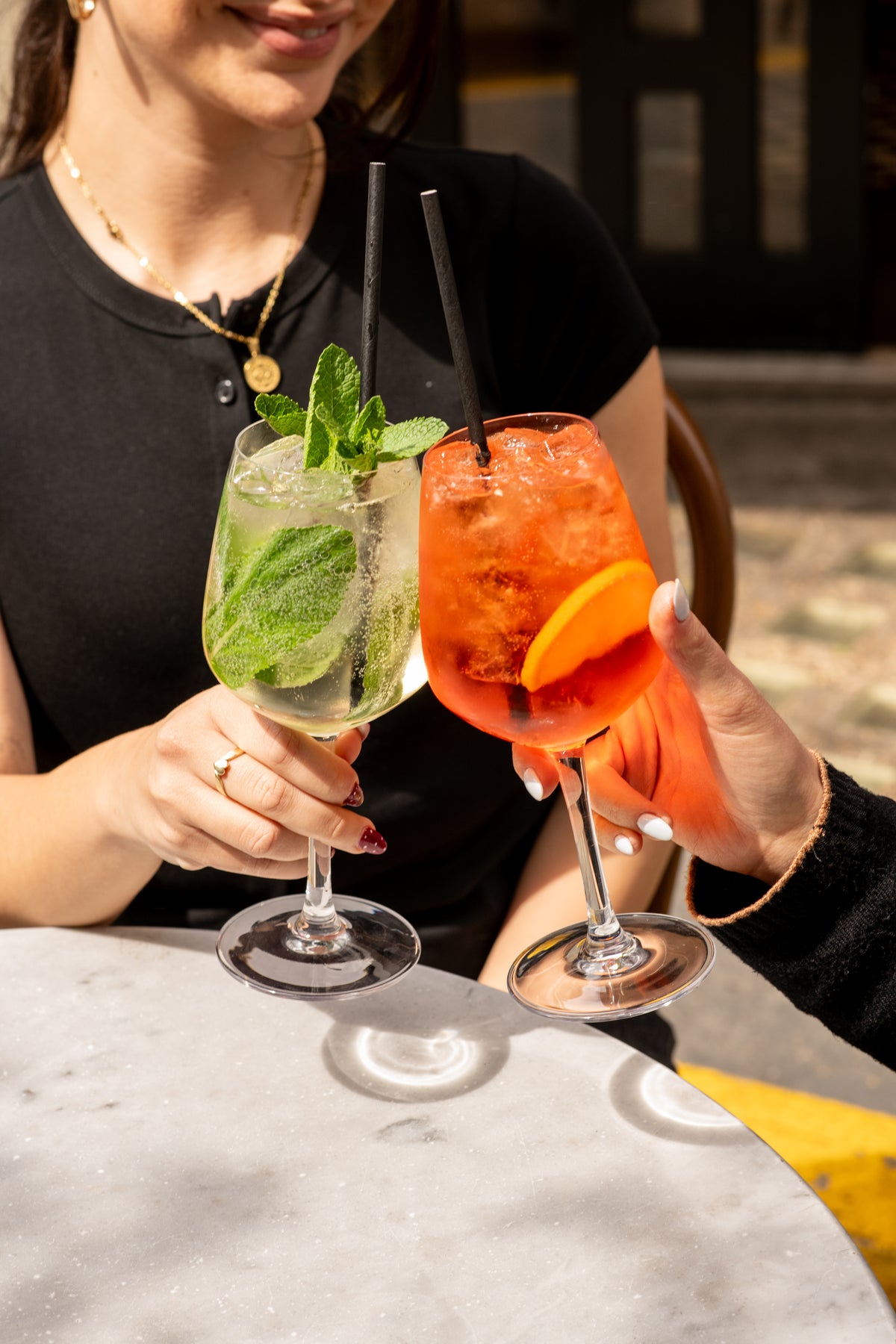
Guests often mention the drinks alongside the food. Normof, who came for pizza with their partner, added: Wine was good, too.
(Normof, Google review) And another guest found The food and drinks were delicious and beautifully presented
(Google review).
Prosecco's light bubbles and fresh acidity suit salty and fried food. From our main menu, try it with the Baby calamari with tartar sauce, the Arancini, the Capesante (pan-fried scallops in a lemon butter sauce) or a Margherita pizza. See our posts on capesante, arancini and the Margherita. Planning a party? See celebrations at Fiena.
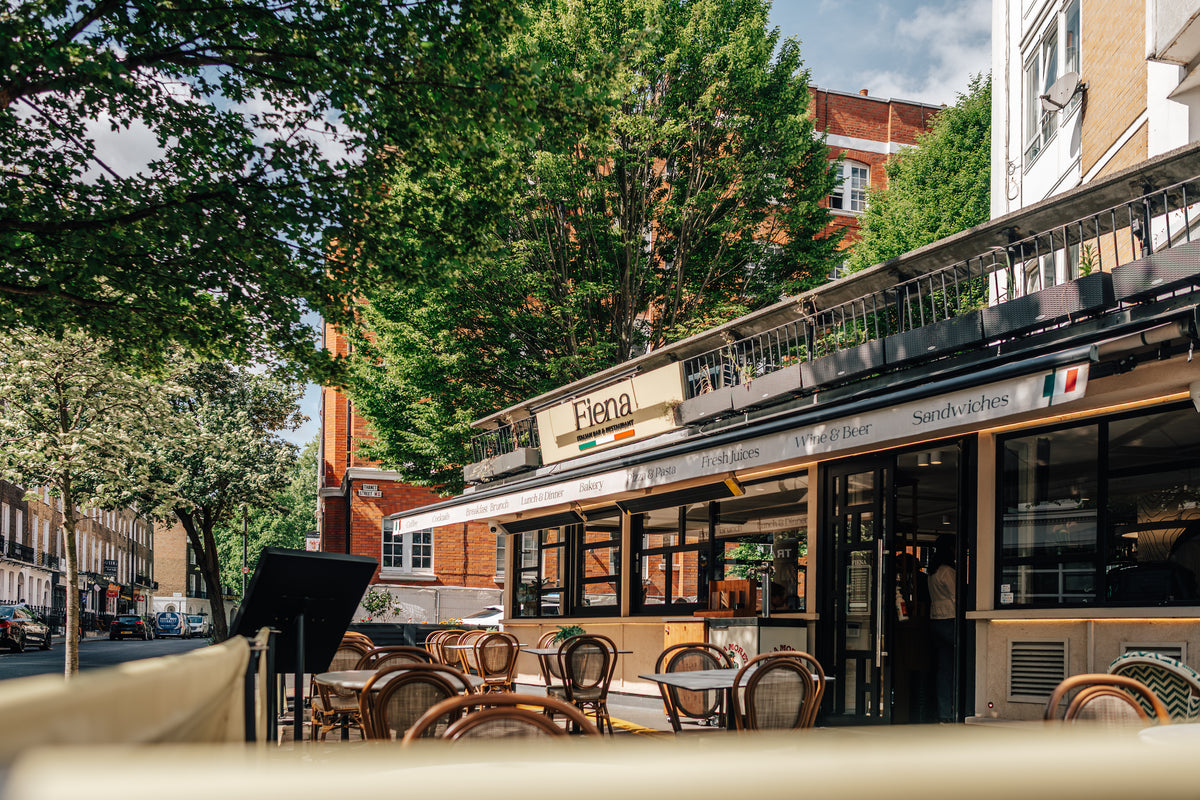
“the cocktails were delicious”
Yasmeen, Google review, 2026
Fine bubbles from the Asolo hills, from 10:30. Book a table or walk in at 4 Medway Court, Judd Street. Please drink responsibly.
Exmouth Market is one of Clerkenwell's best-loved streets, lined with cafes, restaurants and independent shops. It also has a surprising Italian connection. ...
Read the storyFew drinks are as tied up with London's history as gin. It was blamed for a public health crisis in the 18th century, gave its name to a whole style of spiri...
Read the storyAsk for an Italian white and most people think of Pinot Grigio. But Italy has hundreds of local grapes, and some of the most interesting come from Sicily. On...
Read the story
