
Italian restaurant near Exmouth Market, Clerkenwell
Exmouth Market is one of Clerkenwell's best-loved streets, lined with cafes, restaurants and independent shops. It also has a surprising Italian connection. ...
Read the story
Tucked behind the houses between Judd Street and Gray's Inn Road is one of the most peaceful spots in this part of London, and it's very easy to miss. St George's Gardens is about 400 metres from Fiena, our family-run Italian cafe, bar and restaurant at 4 Medway Court, Judd Street, London WC1H 9QX, roughly a 5-minute walk. Here's its surprisingly dramatic story, and how to fit in a coffee or lunch.
The land was bought in 1713 to serve two parish churches: St George's Bloomsbury, the church by the architect Nicholas Hawksmoor, which hadn't yet been built, and St George the Martyr in Queen Square. Neither had room for a churchyard, so they chose a plot of just over a hectare out in the open fields to the north. It was one of the first burial grounds in London to be set up away from the church it served.
At first families didn't want their relatives buried so far from town. Then the influential churchman Robert Nelson chose to be buried here, and others followed; for years it was known as Nelson's Burial Ground. A high wall went up around it, partly to keep out the body-snatchers who supplied anatomy schools nearby. In 1777, a trial over a body stolen from this ground is said to have been the first indictment for stealing a body for dissection.
By 1855 the ground was so overcrowded that it had to close. Bloomsbury's elegant squares were locked and kept for residents, so campaigners including Octavia Hill and the Kyrle Society pushed to turn old burial grounds into "outdoor sitting rooms" for local people. The first part of St George's Gardens opened as a public garden on 1 July 1884, and the second burial ground was added a few years later, laid out with meandering Victorian paths and lawns around the old chest tombs and headstones.
After years of neglect, local people formed the Friends of St George's Gardens in 1994. Lottery funding followed, and the restored gardens reopened in spring 2001. The gardens are Grade II* listed and are maintained by Camden Council. Background from the Friends of St George's Gardens and Wikipedia's St George's Gardens page.
There are three entrances: Handel Street, Sidmouth Street and Heathcote Street. From the Handel Street gate it's about 400 metres to us, around 5 minutes on foot (walking route from OpenStreetMap): along Handel Street, up Hunter Street and onto Judd Street. Making a day of it? The Foundling Museum and Coram's Fields are just to the south; see our posts on the Foundling Museum, the Charles Dickens Museum and Gray's Inn. Garden opening times are set by Camden Council, so check before you go.
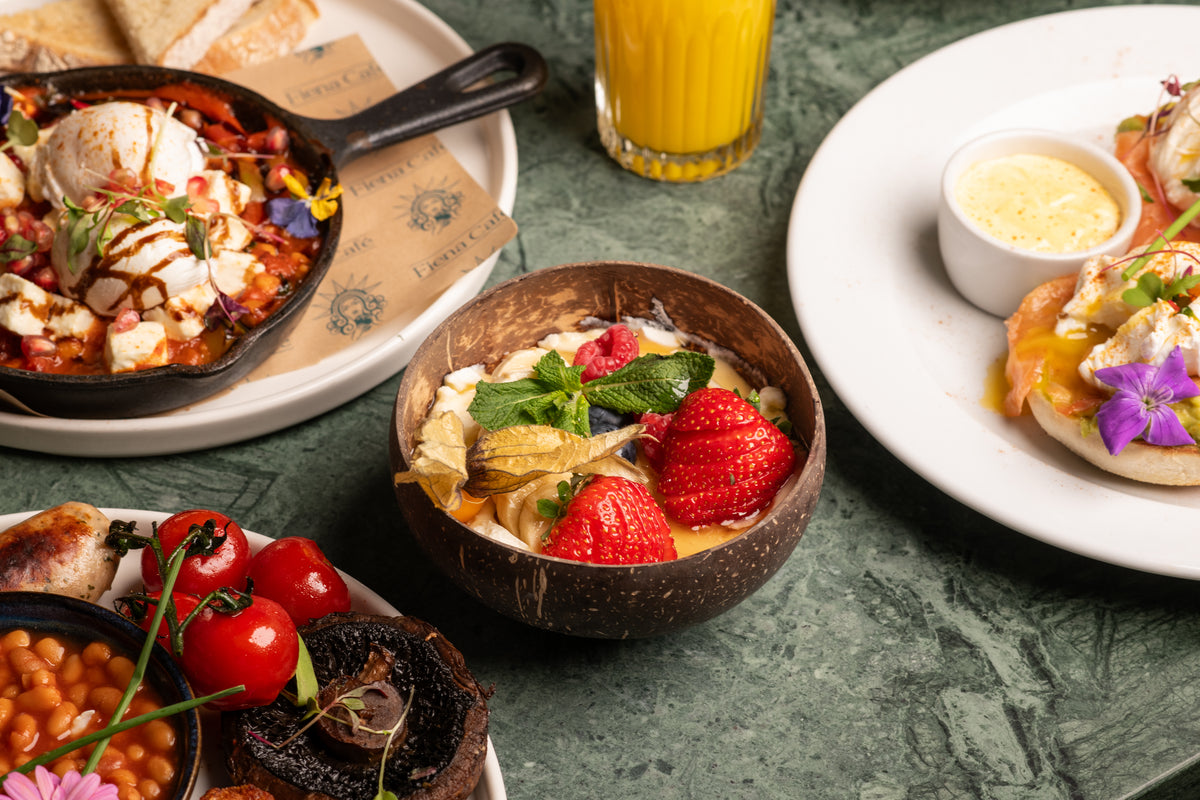
Morning: breakfast runs from 08:00 to 14:00, with coffee all day. A flat white or a cappuccino to start, then eggs Benedict or the full English. See our posts on breakfast until 2pm and Italian coffee.
Lunch: the main menu starts at midday. For something light after a walk, try the Goat cheese salad with walnuts and honey mustard, the Caprese, or a Margherita; for something heartier, the Spaghetti carbonara or the Linguine Fiena with chicken, mushrooms and cream. See salads and light lunches.
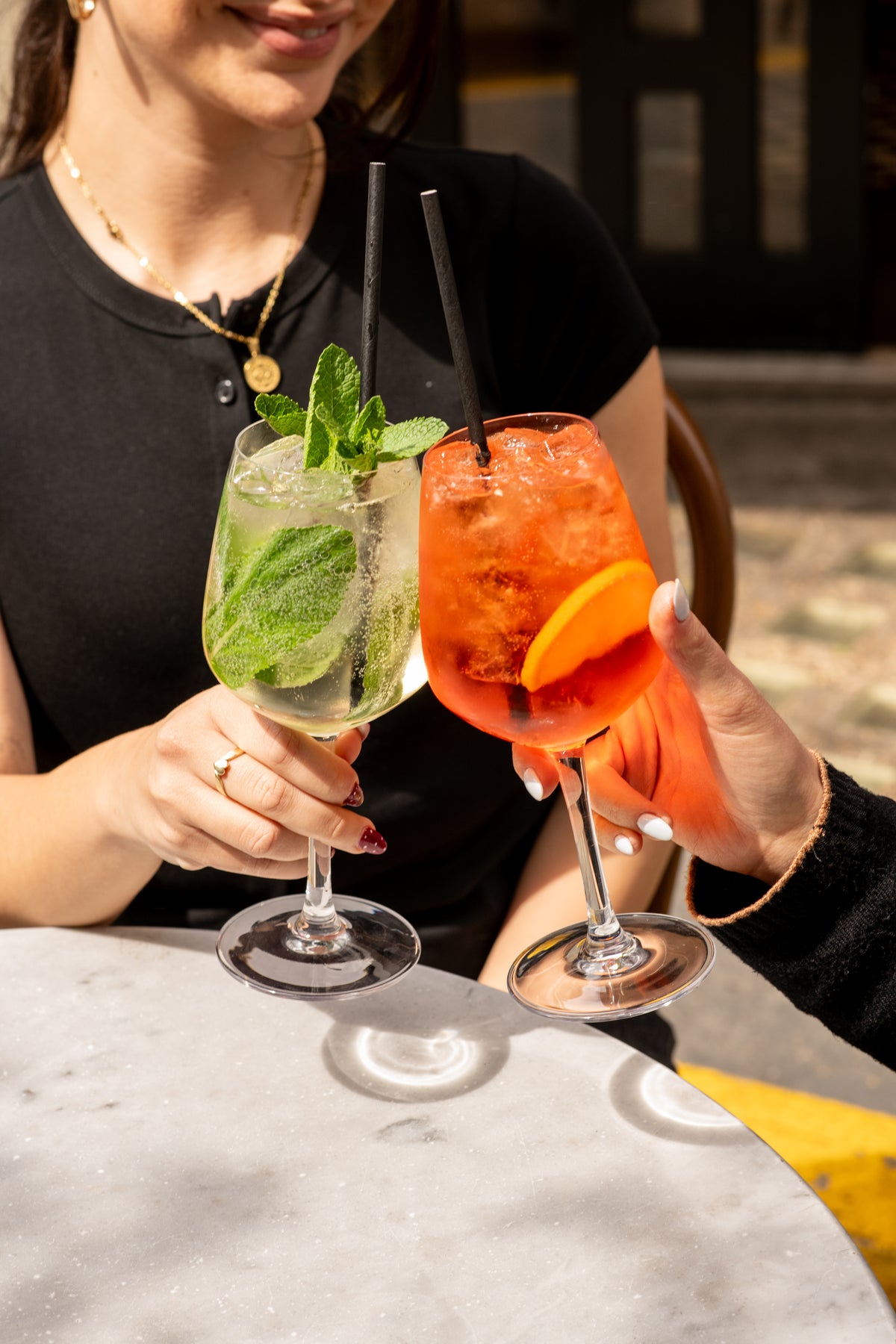
Evening: the kitchen serves until 22:00 Monday to Saturday and 21:00 on Sunday, with cocktails and Italian wines from the bar. See aperitivo and spritz.
Guests like finding us on foot. Tina, who came from Euston, enjoyed the Interesting walk from Euston station as well via the back streets.
(Tina, Google review) Loredana wrote that The café has a warm, authentic Italian atmosphere.
(Loredana, Google review) And Martin found a great welcome
(Martin, Google review) from the moment he walked in.
“Great food, great service, great food.”
Matt, Google review, 2026
From a hidden Georgian garden to a plate of pasta in about five minutes. Book a table or just walk in.
Exmouth Market is one of Clerkenwell's best-loved streets, lined with cafes, restaurants and independent shops. It also has a surprising Italian connection. ...
Read the storyFew drinks are as tied up with London's history as gin. It was blamed for a public health crisis in the 18th century, gave its name to a whole style of spiri...
Read the storyAsk for an Italian white and most people think of Pinot Grigio. But Italy has hundreds of local grapes, and some of the most interesting come from Sicily. On...
Read the story
